2026-10-19 ·
Complete Guide to Sewage disinfection and sanitization in Taylorsville, Utah
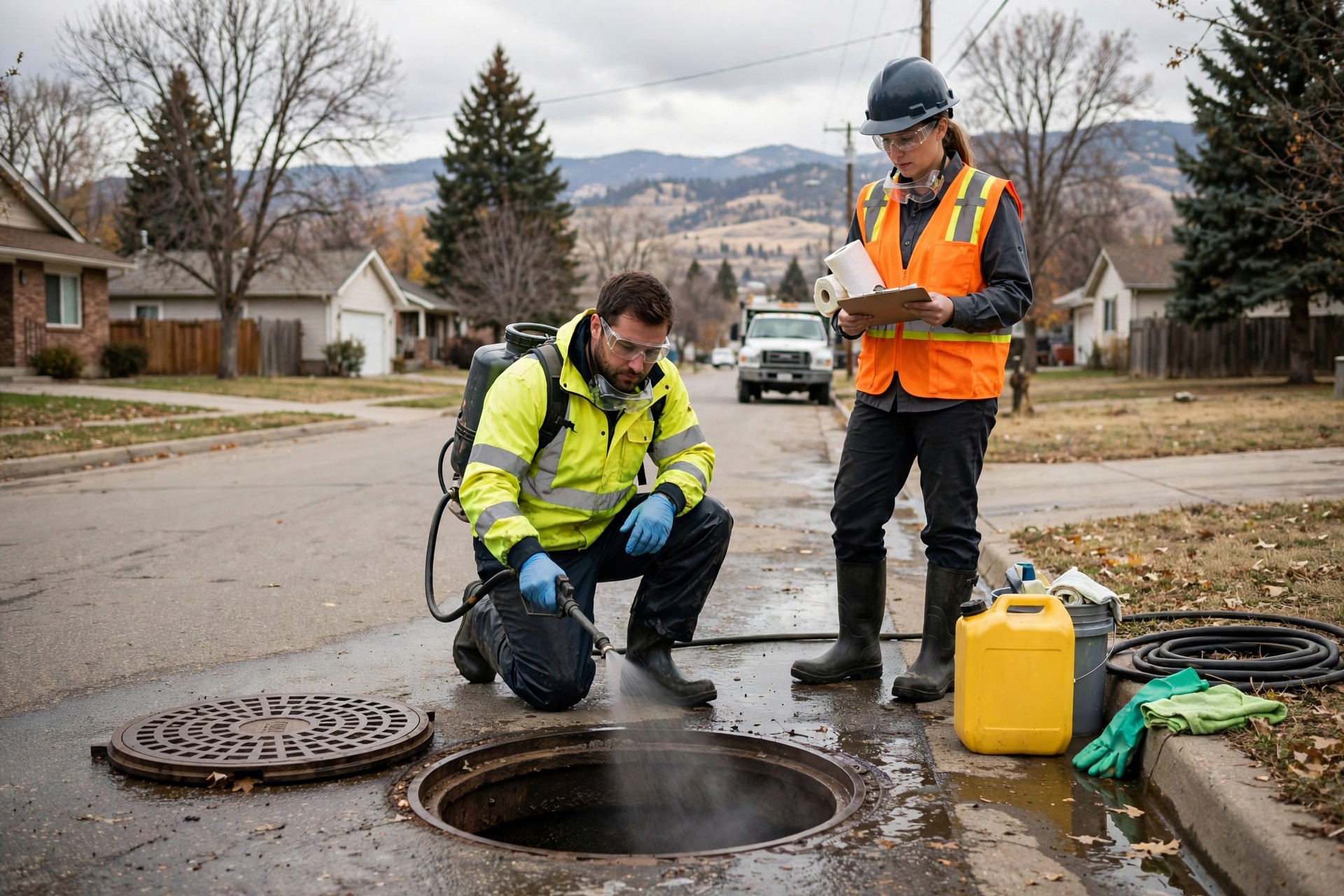
In Taylorsville, Utah, sewage disinfection and sanitization follows a sequenced process that begins with extraction and finishes with targeted antimicrobial application, typically requiring 3-7 days depending on saturation depth and affected square footage. Homes in Taylorsville Central and Bennion often see backups from aging sewer lines during cold snowy winters when ground freeze shifts pipes. The semi-arid climate brings hot summers that can accelerate bacterial growth if moisture remains trapped, while nearby West Valley City and Murray share similar Salt Lake County soil conditions that slow natural drying.
Initial Extraction and Contaminated Material Removal
Effective disinfection starts only after all standing sewage and saturated debris are removed. Technicians use truck-mounted extraction units to pull liquid from carpets, subfloors, and wall cavities in homes near Valley Fair Mall or Redwood. Porous items such as drywall below the flood line and insulation must be cut out and bagged for disposal. In Redwood Corridor properties built before 1980, crews frequently encounter layered flooring that traps water between subfloors, extending the removal phase by a full day. Sewage extraction and removal crews document moisture readings at multiple depths before moving to cleaning. This step prevents cross-contamination when later sanitizers are applied.
Antimicrobial Application and Surface Sanitization
Once extraction finishes, EPA-registered disinfectants are applied to all remaining hard surfaces and exposed framing. Technicians fog or spray in a grid pattern, ensuring contact times of 10-15 minutes on concrete slabs common in Taylorsville basements. In Bennion neighborhoods where homes sit on clay-heavy soil, crews pay extra attention to lower wall sections where capillary action pulls moisture upward. Multiple applications may be needed after initial drying cycles. Contaminated material removal often runs parallel so that any remaining soft goods are handled before sanitizers set. Proper dwell time and ventilation prevent chemical residue while killing pathogens that survive Salt Lake County’s temperature swings.
Drying, Dehumidification, and Verification
After disinfection, industrial air movers and dehumidifiers run until relative humidity drops below 50 percent and moisture meters read under 15 percent on wood. Hot summer days in Taylorsville speed surface drying but leave hidden pockets in crawl spaces near the Jordan River Parkway District. Winter jobs require heated drying chambers because outdoor temperatures below freezing slow evaporation. Final verification uses ATP swabs and moisture mapping across rooms. Properties in Murray and Salt Lake City follow the same protocol, confirming that sanitization meets health-department standards before reconstruction begins. Complete Guide to Contaminated material removal in Taylorsville, Utah expands on disposal rules that apply after this phase.
When Professional Help Is Required
Homeowners should contact 24/7 Emergency Service teams at 2490 W 4700 S whenever sewage reaches living spaces or HVAC systems. Delaying extraction in cold winters allows bacteria to migrate into wall cavities of 1960s-1970s Taylorsville stock. Owner-operated crews familiar with local terrain can stage equipment faster than distant providers and adjust drying plans for the area’s clay soils and freeze-thaw cycles. This approach keeps the full disinfection timeline within 3-7 days and reduces secondary damage in neighborhoods like Bennion and Redwood.