2026-10-19 ·
Complete Guide to Septic backup cleanup in Taylorsville, Utah
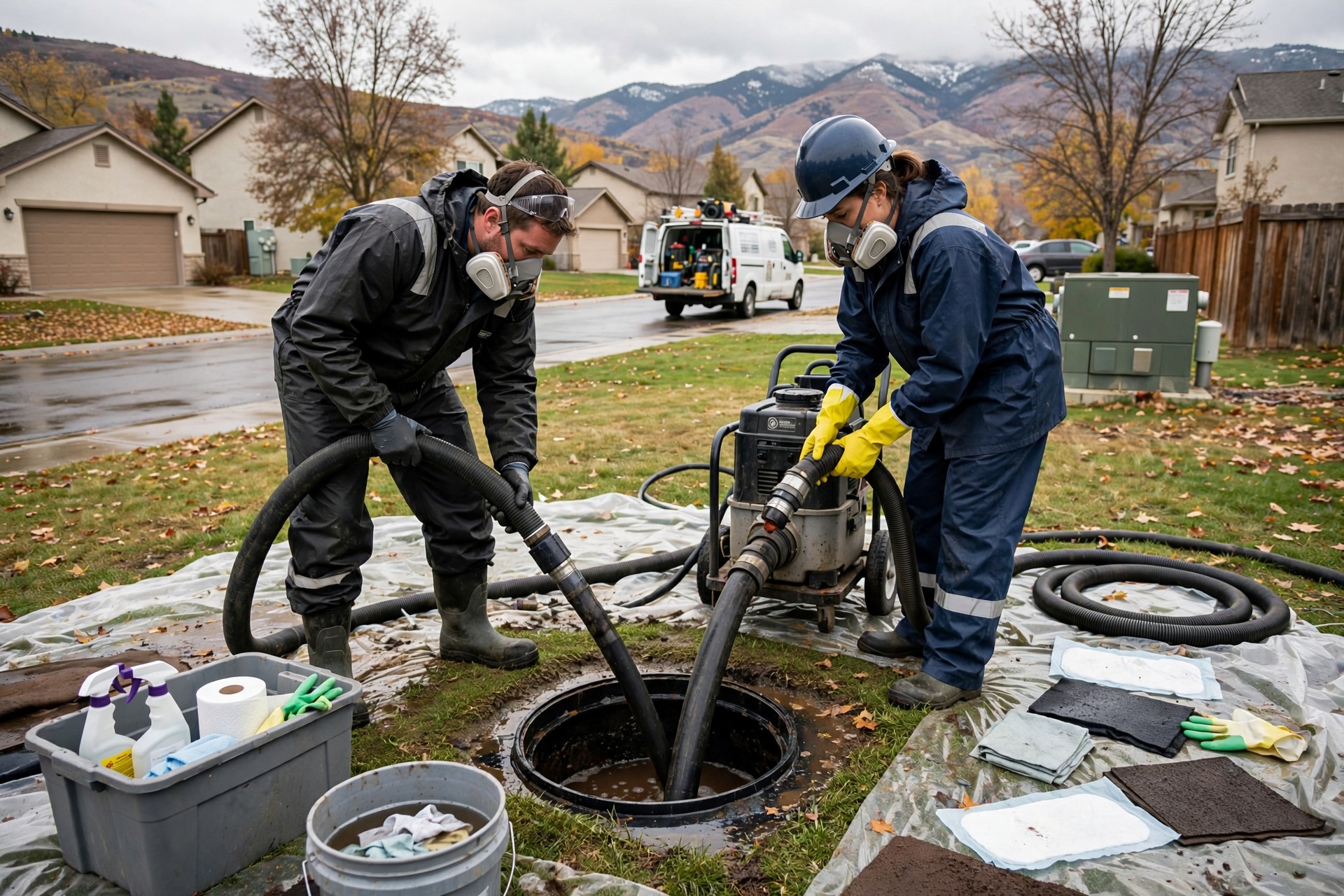
Septic backup cleanup in Taylorsville starts with identifying the source of the overflow and containing the affected zone before any extraction begins. Homes in Taylorsville Central and Bennion often feature systems installed decades ago that struggle with increased household loads, while properties near Redwood see more issues from root intrusion and shifting soil in the semi-arid climate.
Common Causes in Local Neighborhoods
Taylorsville homes built before 1980 frequently rely on septic tanks that were sized for smaller families, leading to solids buildup when modern water use rises. Cold snowy winters can freeze vent pipes and slow bacterial breakdown, while spring snowmelt saturates soil around tanks in Bennion and Redwood, pushing effluent back toward the house. Hot summers accelerate grease congealing in lines near Valley Fair Mall commercial corridors that connect to residential laterals. Nearby West Valley City and Murray share similar clay-heavy soils that reduce drainage rates, making backups more sudden after heavy laundry days. Salt Lake County terrain slopes gently toward the Jordan River, so backups often pool in basements rather than running off yards.
Step-by-Step Response Process
Begin by shutting off water sources and ventilating the space to limit exposure to gases. Septic backup cleanup crews then pump standing liquid using truck-mounted units rated for 500 gallons per minute, followed by removal of saturated carpet and drywall up to 18 inches above the water line. Next comes extraction of solids from the tank itself when the backup originates there rather than the main sewer line. Sewage backup removal focuses on preventing cross-contamination into HVAC systems common in Taylorsville split-level homes. Final verification uses moisture meters to confirm subfloor readings drop below 15 percent before any reconstruction.
Seasonal Factors Affecting Cleanup
Winter jobs in Taylorsville require heated enclosures around extraction equipment because temperatures below 20 degrees can refreeze wastewater on surfaces. Summer work near Taylorsville Park demands extra odor control measures since dry air carries smells farther into neighboring yards. Spring runoff from the surrounding foothills increases groundwater pressure on tanks in the Redwood Corridor, often extending the drying phase by two to three days compared with drier months. Crews stationed at 2490 W 4700 S maintain 24/7 Emergency Service to reach calls within 60 minutes across Salt Lake County regardless of season.
Prevention Measures for Taylorsville Homes
Schedule tank inspections every three years for properties in Bennion where tree cover is dense. Install effluent filters on outlet pipes to catch solids before they reach the drain field, a step that extends system life in the area's variable soil conditions. Route downspouts away from the tank lid to avoid adding extra water during snowmelt. Residents near Murray and Salt Lake City borders benefit from checking cleanouts annually for root growth that thrives in the irrigation ditches common throughout the county. Complete Guide to Sewer backup cleanup in Taylorsville, Utah expands on main-line distinctions that affect long-term maintenance choices.