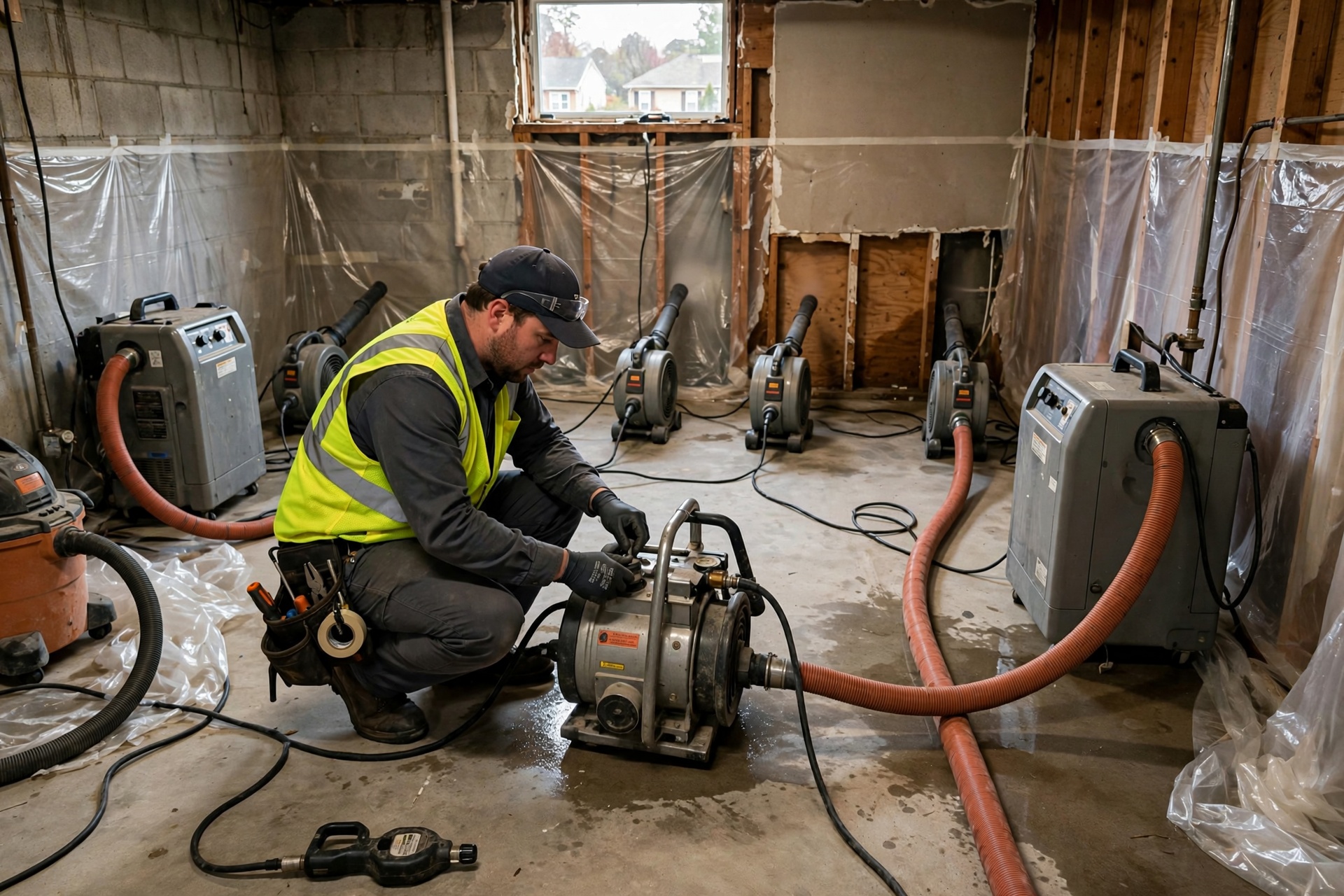
After sewage backups in Taylorsville, structural drying must address both visible water and hidden moisture trapped in older homes common in Bennion and Redwood. Many houses built before the 1980s have concrete slabs and crawlspaces that hold water against the soil, especially when winter freezes push groundwater higher. Technicians use moisture meters to map saturation in subfloors and wall cavities before placing air movers and dehumidifiers sized for the square footage and local humidity swings.
Hot summers in Salt Lake County accelerate mold growth on wet drywall once temperatures climb, while cold snowy winters slow evaporation and require supplemental heat to keep drying equipment effective. Homes near Taylorsville Park and Valley Fair Mall often sit on flat lots with poor drainage, so technicians frequently cut weep holes in baseboards and run desiccants for extended periods. Skipping these steps leaves salts from sewage that wick back to surfaces and cause recurring odors.
Equipment placement follows a grid pattern to create negative pressure zones, pulling moist air out through windows facing prevailing winds rather than trapping it against neighboring structures in dense Bennion blocks. Daily readings track progress until wood moisture content drops below 12 percent, at which point restoration can begin without risking hidden rot in floor joists.
Technician insight
In Taylorsville the thing that catches most people out with structural drying and dehumidification is older homes in Redwood where the slab sits directly on clay soil. Once sewage water gets under the concrete it migrates sideways into adjacent rooms during our cold winters, and homeowners often stop the equipment too soon because the surface feels dry.
Bennion Basement Sewage Drying
A homeowner in Bennion reported sewage backing up through a floor drain after heavy winter runoff. Inspection showed saturation under the slab extending into the adjacent laundry room. Crews ran dehumidifiers and air movers for five days, cutting small access points to confirm moisture dropped to acceptable levels before drywall repairs began.
Structural Drying and Dehumidification Services We Offer
✓Basement Drying After Sewage Backup
Removes standing water and extracts moisture from concrete walls and floors common in Taylorsville basements.
✓Crawlspace Dehumidification
Installs targeted drying in vented or sealed crawlspaces beneath older Redwood and Bennion homes to prevent hidden mold.
✓Subfloor Moisture Extraction
Pulls trapped water from beneath hardwood and carpet in Salt Lake County properties after sewage intrusion.
✓Wall Cavity Drying
Uses air injection and negative pressure to dry insulation and framing inside interior walls without full demolition.
✓Attic Ventilation and Drying
Addresses roof leaks or rising humidity that reaches attics during prolonged Taylorsville winter storms.
Structural Drying and Dehumidification Cost in Taylorsville, UT
| Service | Typical Range | What Affects It |
|---|---|---|
| Single room drying | $600–$1,200 | Depends on access and hidden moisture depth |
| Full basement drying | $1,800–$3,500 | Higher when crawlspace or slab is involved |
| Whole-home structural drying | $2,800–$5,000 | Driven by number of affected levels and winter conditions |
Pricing confirmed on-site before work begins. Call 24/7 for immediate dispatch.
How it works
- 1
Initial Moisture Mapping
Technicians inspect affected rooms in the Taylorsville property using meters to locate hidden saturation in slabs and walls.
- 2
Water Removal And Containment
Extract visible sewage water then set up barriers to protect unaffected areas in neighborhoods like Bennion.
- 3
Equipment Placement
Position air movers, dehumidifiers, and heaters in a grid pattern calibrated for semi-arid Salt Lake County conditions.
- 4
Daily Monitoring
Return each day to record moisture levels until readings stabilize below safe thresholds for restoration.
- 5
Final Clearance
Verify all structural materials are dry before releasing the space for repairs or occupancy.
Pricing
Pricing varies by square footage affected and duration required; most jobs run several days.